


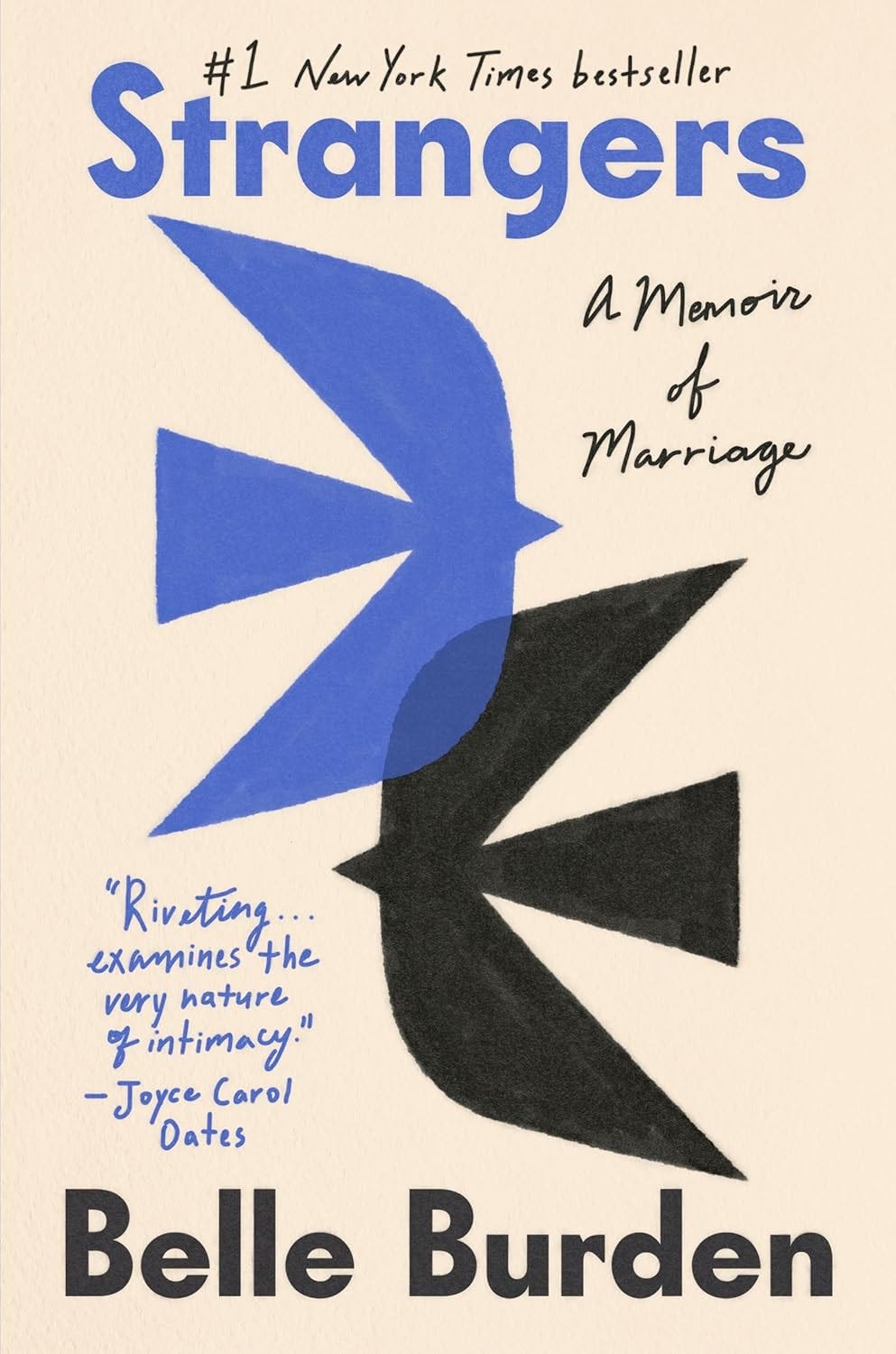
When her husband inexplicably walked out on her, their marriage and their three children, a week after arriving in Martha’s Vineyard to quarantine for the pandemic, Belle Burden struggled to get out of bed. As she writes in her best-selling book, Strangers: Memoir of a Marriage, “It was like a weighted blanket was on me, preventing me from moving, from standing up.”
Soon, a good friend urged her to go outside—just get up, go outside, walk.
So, she tried. She felt heavy; she was slow, but the cold March air felt good. Moving felt good too, enabling her to venture a little farther every day until she created a daily routine, which she calls “the walks.”
The walks for Belle Burden weren’t about feeling good, though. They weren’t about distraction. The walks enabled her to focus on her pain, to walk and weep:
I started to depend on the walks, like they were fuel. I’d read that the best way to handle a heartbreak of any kind was to move through it, rather than around it.
“In looking back on it,” she told Oprah on the Oprah Podcast, “I think I was literally walking through the pain. I was feeling every part of it. And that was really good for me. It was helpful in getting me a little more alive.”
Leaning into the pain, the stress, rather than denying or avoiding it, was not the way she was raised. It was not the way her mother, step-mother, or grandmother handled their own marital difficulties.
It isn’t the way many people handle stressful situations either. Jeremy Jamieson, a psychologist from the University of Rochester, who studies this, says that most people focus on avoiding or reducing stress.
Belle Burden knew, however, that her own path forward was to be honest with herself and others. When she ran into friends or acquaintances on her walks or in the grocery store, she didn’t say “fine” when asked how she was doing. She said that her husband had left her; she didn’t know why, and she was devastated.
Although her former husband urged her to say that the split was amicable—that this would be best for her—she told Oprah:
I felt this full-bodied certainty…that I would not survive this if I tried to lie about it. So, when I ran into people, I just said it.
She faced the pain directly, questioning why this had happened without being vindictive, because she wanted a path forward, and she felt this was the best path for her. She’d seen other friends not move forward, stay angry, stay devastated, stay stuck, and she didn’t want this experience to define the rest of her life.
“You were embarrassed,” Oprah said, “but you didn’t hide, and I think this is what is going to be helpful to so many people.”
Even though leaning into and trying to understand painful and stressful feelings may not be the norm, I wasn’t surprised that this was healing for Belle Burden. Six years ago, I interviewed almost sixty parents from a nationally representative study I conducted for The Breakthrough Years, asking them to walk me through a time when they had “lost it”—not lived up to their expectations of the kind of parent they wanted to be—with their adolescents. Among those parents who had recovered from a bad experience, I heard the same story as the one Belle Burden told.
Those parents leaned into their angst—trying to understand the “why” behind it, feeling the struggle, exploring how the pain was affecting them, then seeking ways to repair what they could repair and move on.
I heard two other intertwined mindsets as well. The parents who felt they had recovered well from a bad experience also held the belief that things could change (a Growth Mindset in Carol Dweck’s research) and felt that they could—somehow, someday—figure out what to do (a Self-Efficacy Mindset).
I called this discovery a Possibilities Mindset (versus an Adversity Mindset), and we’ve been testing and retesting this mindset ever since, finding that it is strongly linked to good mental health, less depression, more engagement in life—basically all the positive things we measure in adults and teens.
Mindsets don’t stand alone on the road to recovery, however. Those parents, like Belle Burden, found tools to help them manage their emotions. In his book, Shift, Ethan Kross calls this creating a toolkit, noting that different tools work for different people—for some it is mindfulness, for others it may be psychological distancing, like looking at their situation from afar (from the balcony). For Belle Burden, it was writing.
She’d always wanted to be a writer but felt she was discouraged from pursuing her passion. Now she’s written a powerful memoir—not for catharsis or healing but to figure things out. It’s a book that poignantly illustrates that while we can’t always understand why others treat us the way they do, we can find our way forward. It’s also the best description of a Possibilities Mindset I’ve ever read!
I’m so grateful you’re reading Research to Thrive By on Substack! My book, The Breakthrough Years is available for purchase here.
Thanks Ellen for this piece about Possibility Mindset... and recommendations about Bell Burden's book... am looking for another good read!
I think the notion of a Possibility Mindset is the single best idea I've heard to help parents be more flexible and accepting of themselves and their kids. It's also a great counter to the predatory "parenting industrial complex" self-help industry which breeds parenting perfectionism and blocks parents from trusting their instincts. It's encouraging to have voices like yours as an antidote to the nonsense, Ellen!